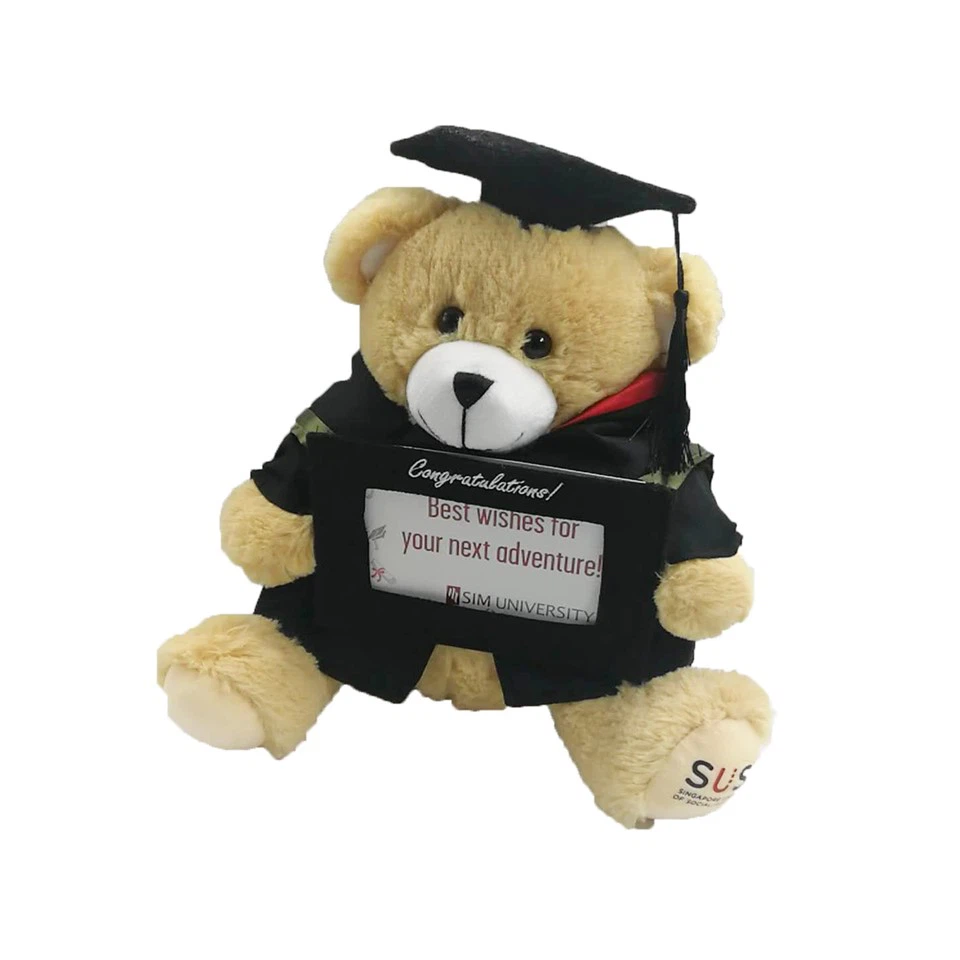
What Is a Teddy Bear


Teddy bears are if not one of the most popular toys in the world. Every kid has had a furry bear in their life. The toy bear consists of a head, abdomen, arms, and legs, all of which are sewn together and stuffed to create a soft and squishable bear toy.


Why Choose Us?
 
01/

Rich Experience
Established in 2017, Baby Plush is dedicated to provide the safe and high quality soft toys to the children all around the world. 16 years focus on plush toy industy.

02/

Quality Control
We adhere strictly to international quality standards as evidenced by our certifications from SGS, ISO, CE, CPC among others. These certifications ensure that all products undergo rigorous testing processes before reaching customers' hands. As a result, clients can be assured of consistent product quality throughout their purchasing experience.

03/

Professional Team
Our team boasts strong technical capabilities supported by advanced production equipment. We are equipped to provide customized design solutions that cater specifically to your requirements. Whether you need unique character designs or specific functionality features, we can deliver optimal design and production strategies that enhance both aesthetics and usability.

04/

One-stop Solution
We offer a comprehensive suite of services, including design, sample development, manufacturing, and quality control tailored to meet the diverse needs of our customers. Our commitment is backed by a guarantee that the quality of the finished product will align with your expectations and industry standards.

First 12 Last
The Manufacturing Process of Teddy Bears


After the design is accepted, it is transferred to a blueprint from which paper patterns are made. The shapes are cut out and pinned to fabric. Many layers of plush may be stacked with the pattern pinned on the top, and a cutter with a blade much like a band saw is used to cut out many pieces at one time.


Rows of workers sit behind industrial sewing machines. Each is responsible for one style of bear. He or she will assemble the small pieces first, add the eyes and grommet attachments to the face, and then stitch the parts together. The bears are inside out with their seams exposed and openings down the long seam in the back. Finally, the bears are pulled right side out and dispatched to be stuffed.


The stitched bear is then stuffed. The polyester fiber bales in which the fiber is tightly packed. The fiber is dual density with a very fine fiber and a thicker, slightly wavy fiber, together, these fibers have the most desirable packing quality for stuffing animals.


Because the polyester comes so tightly packed, batches of it are tossed into a picker, which is a barrel lined with spikes that fluffs the stuffing. The fluffed material is blown by air into a stuffing machine. These machines have evolved little since world war h, when the machines were used to stuff flight jackets for the united states navy and army air force.


Air pressure blows the stuffing into the bear through a small diameter tube. The operator can manipulate the bear to direct the stuffing to various parts of the toy. A pedal release on the stuffing machine controls the puffs of stuffing. Two pushes on the pedal, for example, may be needed to pump enough stuffing from the machine's nozzle into the nose of the bear, which needs to be firm.


The head, feet, and paws also need to be firm, but the body should be squeezably soft. The operator can always apply the "hug test" to evaluate satisfactory cuddliness and provide quality control from bear to bear.


The stuffed bear is then passed to another worker, a "bear surgeon," who stitches up the opening in the back of the bear. The whole bear is then groomed. Because the plush fabric was stitched inside out, "fur" is caught in the seams and must be pulled out so the seams do not show.


An electrically powered wire brush is used to fluff the seams, and the bear is then blown through an array of air jets to remove the loose fuzz and brush the fur. Final details like costumes, ribbons, and accessories are added before the bear is packaged for transport and sale. 


The Role of a Teddy Bear in a Child's Development


For generations, teddy bears have been a staple in children's lives, providing comfort and companionship but a teddy bear isn't just a soft cuddly toy for a child to sleep and play with, it can also play a pivotal role in their social and emotional development.


● Comfort & security
Teddy bears can provide comfort and security to children. They offer a sense of familiarity and safety, easing feelings of anxiety and stress, especially during times of separation.
A transitional object tends to be chosen towards the end of the first six months of a baby's life and will have 'qualities reminiscent of the mother: It is soft, it can be stroked, cuddled, and bitten'.
A teddy bear brings a child a sense of security. In times of stress, touching and cuddling a teddy can be comforting and soothing, providing a sense of familiarity. A teddy bear can act as a protector, evoking a feeling of safety and comfort, especially in unfamiliar situations or when a child feels lonely or isolated. Teddy bears also provide comfort when primary caregivers are absent.


● Socialisation
At around 12 to 18 months old, children start to learn fundamental social skills. At this stage, a child will begin to 'play' which, according is 'fundamental to the development of a healthy mind'.
Children learn about emotions and social skills through play. Through interacting with their teddy, children learn how to care for 'someone', how to empathize, and how to share. This play also helps children develop their communication skills, which in turn helps prepare them for interacting with people.


● Compassion and empathy
Caring for a teddy bear satisfies the need to nurture and connect with others. Through pretend play, children learn to consider the needs of others, which fosters an appreciation for relationships. Teddy bears are particularly effective because children often identify with them and feel a sense of responsibility to care for them.


● Role play
When playing with a teddy bear, a child breathes life into it. There is no limit to the number of games that a child can invent, a teddy bear can become a superhero, a princess, or an astronaut, allowing children to explore their creativity and imagination. Acting out stories and scenarios with their teddies helps children develop their language, social, and emotional skills. Children may also express emotions and thoughts while playing with a teddy bear that they might not be able to convey using words.


● Language skills
Engaging in pretend play also helps develop speech and language skills. In talking to their teddies, children practise their vocabulary, try out new words, and gain confidence in their speech. These pretend conversations allow children to express their emotions and articulate their thoughts. Storytelling with toys is also thought to help with reading and writing.


● Development of fine motor skills
Playing with teddy bears helps with the development of fine motor skills in children. Dressing up a bear or feeding a teddy using small utensils requires concentration and coordination to perform the activities successfully. Children who lack fine motor skills may struggle to write, draw, or dress up independently.
Teddy bears are more than just adorable companions. Teddy bears provide children with a sense of security, they foster emotional growth and resilience and teach children about emotions, social skills, and empathy, helping them to develop into well-adjusted children ready to venture out into the world. 


Terms Associated with the Teddy Bear
Graduation Teddy Bear
Christmas Personalised Teddy
Lavender Microwavable Teddy Bear
Purple Teddy Bear

● Mohair
This is a natural plush material, which is used traditionally for making teddy bears. "mohair", which means "fabric made of goat hairs", descends from the hairs of the angora goat. Mohair is very hard wearing. Its silky brightness makes mohair one of the most valuable fibers that nature has to offer.


● Alpacca
This is a very rare and a most valuable natural plush material, which is also used for making very special artist bears. The alpacca fibers descend from the hair of the alpacca animal.


● Artificial silk
This is a man made plush material, which was developed in the thirties. Artificial silk was used for making teddy bears especially in the forties and fifties. Because this original artificial silk material can no longer be made because of technical reasons, teddy bears made of artificial silk enjoy the highest response.


● Felt
This is a fabric material, which is traditionally used for making the teddy bear's paws.


● Excelsior
This is a natural material, which is traditionally used to fill teddy bears. Excelsior is a very fine kind of wood wool made of pine-wood. Special old and traditional tools are needed to stuff a teddy bear with excelsior. To stuff teddy bears with excelsior is a very old craft and difficult to learn. It needs much more time to fill a teddy bear with excelsior than to fill it with other material.


● Kapok
This is a natural material, which is used in former times to stuff soft teddy bears. The kapok fibers descends from the fruit of the tropical kapok tree. Today kapok is no longer used to stuff teddy bears.


● Sheep's wool
This is a natural material, which is used in former times to stuff soft teddy bears. Today sheep's wool is only used sporadically to stuff very high quality collectible teddy bears.Foam rubberthis was the first ever used synthetic filling material for teddy bears. Mainly it was used in the seventies, to make teddy bears washable. In addition foam rubber flocks have a special importance as filling material, because they could be manufactured with a stuffing machine.


● Polyester fibers
This is a very soft synthetic high quality filling material for teddy bears. It can be manufactured by hand or machine. Today polyester fibers is the most common filling material for today's teddy bears.
Granulated materials made of polyester, steel, glass or others
This is a modern filling material for teddy bears, which is mainly used for some special artist bears.


● Shoe button eyes
These are black, not glossy teddy bear eyes, which are made of old shoe buttons. Shoe button eyes were used for the first generation of teddy bears. Today original old shoe button eyes are not longer available for teddy bear production.


● Glass eyes
These are hand made teddy bear eyes made of glass material, which are traditionally used. They must be drawn into the bear's head by handwork. Because glass eyes do not conform with the european safety standards for toys, glass eyes are only used sporadically for very high valuable collectible teddy bears.


● Safety eyes
These are eyes made of plastic material, which can be riveted into the head of a teddy bear. Because of the european safety standards, safety eyes are predominantly used for the production teddy bear today.


● Growler voice
This is a special voice box, which is traditionally built into the teddy bear's body. Because the voice box has a fixed size, only teddy bears with a size of 30 cm respective 12 inches and more can get a growler voice. The growler voice works if the teddy bear is moved forward and back by turning the head up and down.


● Other voices for teddy bears
In addition to growlers there are also music voices and others, which can be built into a traditional teddy bear, so that the bear can make a variety sounds.


The Therapeutic Role of Teddy Bears


● Emotional comfort and support
Teddy bears serve a therapeutic role by providing emotional comfort and support to individuals across various age groups. Their soft and huggable nature offers security, especially during stress, anxiety, or loneliness. Holding or cuddling a teddy bear can evoke feelings of calmness and reassurance, acting as a tangible source of comfort in moments of emotional distress.


● Stress relief and relaxation
Engaging with teddy bears can facilitate stress relief and relaxation. The act of hugging or simply handling a teddy bear can stimulate the release of oxytocin, often called the "love hormone." this hormone helps reduce stress levels and promotes well-being, aiding in relaxation and alleviating tension or unease.


● Coping mechanisms and mental health support
For individuals facing challenging circumstances or coping with trauma, teddy bears can play a vital role in providing a sense of companionship and emotional support. They serve as non-judgmental listeners and silent companions, allowing individuals to express emotions and find solace in their presence. In therapeutic settings, teddy bears are sometimes used to comfort and encourage self-expression, particularly in counseling or therapy sessions with children or individuals facing emotional difficulties.


● Support for elderly and patients
Teddy bears are also utilized in eldercare facilities and hospitals to comfort the elderly or patients undergoing medical treatments. Their presence can offer a sense of familiarity and companionship, reducing feelings of isolation and contributing to a more positive emotional state. In dementia or alzheimer's care, teddy bears have been known to evoke memories from the past, serving as triggers for reminiscence therapy and improving mood and cognitive function.
Teddy bears have been found to play an essential role in therapy by providing emotional comfort, stress relief, and companionship. Their comforting and soft presence has been shown to be effective in reducing anxiety, promoting relaxation, facilitating emotional expression, and providing support. This is why they are considered valuable tools in various therapeutic and healthcare settings. 


How to Clean a Teddy Bear in a Washing Machine
 

Before cleaning a teddy bear in a washing machine, be sure to check the care label and see if it's recommended. Also, check to see if it has removable stuffing. If so, remove the stuffing prior to washing so it does not form clumps. 


Brush decorative elements
Using an old soft toothbrush and a little bit of laundry detergent with water, brush any button eyes or non-removable clothing details clean. The toothbrush will loosen up embedded dust, dirt, and other types of soil. Wash any removable clothing and accessories separately.
 

Use a mesh bag
Put the teddy bear into a protective mesh bag (like a lingerie bag) or pillowcase before putting it into a washing machine. This is a good idea for a delicate teddy bear but should be considered when you wash any stuffed toy.
 

Add laundry detergent
Choose a favorite gentle laundry detergent and add it to your wash load.
 

Choose cold water and gentle cycle
Use cool or cold water and a gentle cycle only when washing a teddy bear. Be careful with glued-on, plastic, or decorative parts as warm or hot water can loosen the adhesive and melt the materials.
 

Dry the teddy bear
Place the teddy bear on a laundry rack inside the tub or shower to air-dry or place in any well-ventilated area, like a room with a fan. Massage the stuffing (if you did not remove it) before and during the time it dries so it does not dry clumped. Another drying option is to drop-dry the bear by hanging it from a clothesline. Avoid doing so outside in the sun as it may result in fading.
You may also use a blow dryer or fan to finish drying out the bear.
 

Brush the fur
Give the teddy bear a bit of grooming. If the fur looks matted after washing and cleaning, you can make a teddy bear fluffy again by brushing its fur gently with a soft-bristled brush. This restores the sleek shiny look that the teddy bear originally had. 


Our Factory
 

Established in 2017, Baby Plush is dedicated to provide the safe and high quality soft toys to the children all around the world. Our main products includes stuffed animals, customized mascots and promotional plushies and so on. All our products are produced in accordance with international standards like EN-71 and ASTM. Our goal is to provide professional, accurate and timely solution to every problem of our clients. Our young foreign trade team will offer you superior service around the clock. Our mission is to save cost and create value constantly for our clients so as to elevate their brand value and reputation in target markets. Over the past few years, we have offered professional and quality gift solutions to world-renowned enterprises. Meanwhile, we have provided quality licensed plush toys for numerous well-known toy brands and shopping malls. We are looking forward to establish sincere, mutual trust and win-win cooperation with more clients. 


productcate-1-1


FAQ

Q: Are there different types of teddy bears?

A: Teddy bears come in different sizes, colors and decorated in various ornaments, such as bows, scarves, etc. Some even come in clothing.

Q: Is a teddy bear a toy?

A: A teddy bear is a stuffed toy that's a small, adorable version of an intimidating, furry mammal. The original teddy bear was named after U.S. President Theodore Roosevelt. In 1902, the first teddy bears appeared on the toy market.

Q: Why is a teddy bear a good toy?

A: A teddy bear brings a child a sense of security. In times of stress, touching and cuddling a teddy can be comforting and soothing, providing a sense of familiarity. A teddy bear can act as a protector, evoking a feeling of safety and comfort, especially in unfamiliar situations or when a child feels lonely or isolated.

Q: Why teddy bear is so cute?

A: "They give us something to cuddle with, and usually, all teddy bears look adorably cute. Even though they are nonliving things, a teddy bear radiates love and compassion I feel." Some girls like teddy bears because of that comforting feeling they get from it. "We all have our inner baby inside of us.

Q: Why are teddy bears so loved?

A: It turns out that the psychology behind why we find them so comforting and endearing is actually quite fascinating. Giant teddy bears are seen by many as a symbol of warmth, security, comfort, and love. This is because they represent something we all crave - unconditional acceptance and non-judgmental companionship

Q: Can you dry clean a delicate teddy bear?

A: You can use a home dry cleaning bag, to clean your teddy bear as well. Place in the dryer on low or no heat as per the instructions on the label. This will allow toys to come out smelling fresh without risking damage such as snags or tears.

Q: Why do girls like teddy bears?

A: One of the main reasons why many women like being gifted teddy bears is that they provide a sense of comfort and security. They are soft and cuddly, making them the perfect snuggle companion.

Q: What is a teddy bear personality type?

A: People who choose teddy bears as their favourite soft toy are often caring and nurturing, always putting the needs of others before their own. They are dependable, always there for their friends and family, and they bring a sense of comfort and stability to those around them.

Q: What material is used to stuff teddy bears?

A: Polyester: Known as a synthetic toy stuffing fiber that's soft and durable, polyester stuffing is often used in teddy bears and other plushies. Polystyrene Bean Bag Filling: As the name suggests, this polyester filling is often used in bean bags. It also has a texture similar to other more brittle heavy metals.

Q: What are stuffed teddy bears made of?

A: Materials: Teddy bears were originally made from mohair fur which imitated the coarse fur of real animals. Today teddy bears can be found in almost any fabric including velvet, satin, synthetic fur, cotton, denim, and crochet.

Q: Is it possible to whiten a graying teddy bear?

A: To brighten up a washable bear that's grown dull, you can soak in a bit of oxi-clean and water. Proceed to washing by machine or hand from there. You can also place it in a sealed bag with baking soda and allow it to soak up the oils and residue. Proceed to washing or vacuuming from there.

Q: What makes a teddy bear special?

A: A teddy bear brings a child a sense of security. In times of stress, touching and cuddling a teddy can be comforting and soothing, providing a sense of familiarity. A teddy bear can act as a protector, evoking a feeling of safety and comfort, especially in unfamiliar situations or when a child feels lonely or isolated.

Q: Which color teddy bear is best?

A: Popular color choices can vary, but neutral shades like brown, beige, and gray are often used. Textures can include a variety of soft, fluffy fabrics, as well as more structured fabrics like denim or corduroy. Some contemporary teddy bear designs also feature unique embellishments or patterns.

Q: Are teddy bears good for you?

A: Though there is no robust scientific literature on the effect of stuffed animals on adult sleep, several studies have shown that plush companions can help adults self-soothe. A 2016 study observed that holding a stuffed animal during group therapy allowed college students to better comfort themselves.

Q: What is the purpose of a teddy bear?

A: For generations, teddy bears have been a staple in children's lives, providing comfort and companionship but a teddy bear isn't just a soft cuddly toy for a child to sleep and play with, it can also play a pivotal role in their social and emotional development. Teddy bears can provide comfort and security to children.

Q: Are teddy bears good for mental health?

A: Teddy bears can be social companions, and while not substitutes for other people or animals, friendly mental health teddy bears are valid tools for helping children and adults to cope with the sense of isolation.

Q: How do teddy bears help people?

A: Teddy bears, along with other stuffed animals, can be beneficial for adults as they provide a sense of comfort, reduce stress, View source and evoke positive emotions. The tactile experience and the association with childhood memories make them effective tools for relaxation and emotional well-being.

Q: How do you wash a teddy bear without ruining it?

A: Place the stuffed animal in a mesh laundry bag, zippered pillowcase or pillowcase with the ends tied for added protection against wear and tear. We recommend using the Delicate, Hand Wash or Gentle cycle setting on your washing machine, along with cold water to help keep colors from fading.

Q: How to clean a teddy bear in a washing machine?

A: Before cleaning a teddy bear in a washing machine, be sure to check the care label and see if it's recommended. Also, check to see if it has removable stuffing. If so, remove the stuffing prior to washing so it does not form clumps.

Q: How often to clean a teddy bear?

A: If a teddy bear is carried around daily as a loyal companion, it's important to clean it at least once a month. Even if your teddy bear is mostly sitting on a shelf, it can still accumulate dust and dirt in its fur and decorative clothing folds, which can lead to an unhygienic state. Therefore, it's essential to clean it occasionally to maintain its condition and hygiene.

We're well-known as one of the leading teddy bear manufacturers and suppliers in China. Please feel free to buy high quality teddy bear made in China here from our factory. Contact us for more details.

teddy bear, small teddy bear

Send Inquiry